
Subtotal:
R0.00
Phone Charging Lockers in South Africa: How to Choose the Right Phone Charging Station for Your Business
Lockable Phone Charging Station Capetown, Johannesburg and Durban South Africa.
Phone Charging Lockers Capetown, Johannesburg and Durban South Africa: A Business Buyer’s Guide.
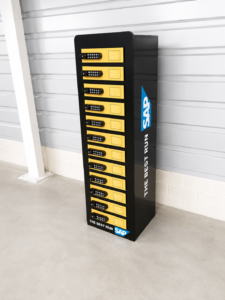
Looking for a phone charging locker or branded charging station for your business? This guide explains the options, what to look for before buying, and how to choose a solution that suits your customers, staff, visitors or event attendees.
Table of contents
-
Why commercial phone charging matters
-
What is a commercial phone charging locker?
-
What is a branded multi-device phone charging station?
-
Phone charging lockers vs open charging stations
-
How PIN-lock charging lockers work
-
Benefits of branded phone charging stations
-
Choosing the right charging solution for your business
-
Charging lockers for shopping centres and retail businesses
-
Charging stations for hotels and hospitality
-
Charging stations for gyms and fitness centres
-
Charging lockers for offices and workplaces
-
Charging solutions for schools and universities
-
Charging stations for conferences, exhibitions and events
-
Branding and customisation opportunities
-
What to look for when buying phone charging lockers in South Africa
-
Pricing, value and total cost of ownership
-
Why branding, delivery and after-sales support matter
-
Exploring the Vischarge product range
-
Understanding the Vischarge promotional offer
-
Common mistakes to avoid when buying
-
Frequently asked questions
-
Final buying checklist
-
Conclusion: choosing the right phone charging solution
1. Why commercial phone charging matters
Think about the last time you visited a shopping centre, attended a conference or waited in a hotel reception area with a phone battery that was almost flat. You probably started looking for a power outlet, a charging cable or somewhere to sit while your phone charged.
Now imagine being responsible for a venue used by hundreds or thousands of people. Visitors arrive with different phones, different charging cables and different expectations. Some need enough power to get through the afternoon. Others rely on their phones for electronic tickets, payments, work messages, navigation or keeping in touch with family.
Providing a practical place to charge a phone can help address this everyday problem.
For businesses, the question is not simply whether people need to charge their phones. It is how to provide that service in a way that suits the venue, fits the available space and makes sense financially.
That is where commercial phone charging equipment comes in.
A business might choose a secure charging locker, where users place their phones inside individual compartments, or an open-access charging station, where several devices can connect to charging cables at a shared point. Some stations can also be customised with a company’s branding, making them a practical customer amenity as well as a visible part of the venue’s presentation.
The right option depends on what the business needs to achieve.
A hotel might prefer a secure option for guests who want to leave a phone charging while attending to something else. An exhibition organiser may want a branded station where several attendees can charge their devices during networking breaks. A gym might need a compact unit near reception, while an office may want a convenient charging point for employees and visitors.
There is no single answer for every setting. The most useful starting point is to understand the difference between the available products and the way people will use them.
Why businesses are considering dedicated charging equipment
Dedicated phone charging equipment can offer several practical advantages.
First, it gives visitors a clearly designated place to charge their devices instead of relying on whichever wall socket happens to be available. Second, it can help a venue organise charging access more neatly. Third, it gives the business greater control over where charging takes place and how the equipment is presented.
Where branding is available, the station can also carry a company logo, campaign artwork or other approved visual elements.
These are practical benefits rather than guaranteed financial outcomes. A charging station will not automatically increase sales, customer loyalty or the time visitors spend at a venue. Those results depend on the location, audience, quality of the overall experience and how the facility is managed.
For a business considering the investment, the important question is whether a dedicated charging solution meets a genuine need.
Why the South African business context matters
Businesses in South Africa operate across a wide range of environments, from shopping centres and hotels to offices, educational facilities and large public events. Their requirements can differ considerably.
A permanent installation in a retail environment may need to accommodate regular daily use. An event organiser may be working to a fixed date and need equipment delivered in time for the event. A business with several branches may need consistent branding across multiple locations.
Before purchasing, it is worth considering local delivery arrangements, access to after-sales support, the availability of suitable charging connections and the conditions under which the equipment will be used.
These practical details often matter more than a long list of technical features.
What this guide covers
This guide explains the main types of commercial phone charging equipment, how secure lockers differ from open charging stations, and what buyers should consider before choosing a product.
It also looks at potential applications in shopping centres, hospitality, gyms, offices, schools, conferences and exhibitions.
Finally, it explains how Vischarge’s four-door PIN-lock charging locker and branded multi-cable charging station fit into the decision-making process.
If you are comparing suppliers or preparing a purchase request for your business, the aim is to help you ask the right questions before committing to a solution.
2. What is a commercial phone charging locker?
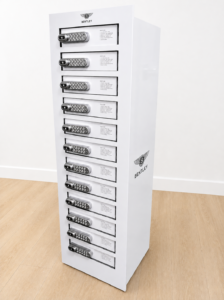
A commercial phone charging locker is a unit that provides charging access through individual compartments. A user places a phone inside a compartment, connects it to the available charging equipment and uses the locking arrangement provided by the particular model.
Depending on the design, the compartment may be secured with a PIN code or another access method. Some products use electronic keypad locks, while other systems may offer card-based access or different locking arrangements.
The exact features vary between manufacturers and models, so it is important to confirm the specification of the product being purchased.
How a charging locker is used
The general process is straightforward, although the precise steps depend on the unit.
-
The user selects an available compartment.
-
The phone is connected to the appropriate charging cable or charging system.
-
The user follows the manufacturer’s instructions to secure the compartment.
-
The phone remains inside while charging.
-
The user returns and follows the designated procedure to retrieve the phone.
A business should ensure that the instructions supplied with the actual product are clear and visible. Users should understand how to secure the compartment, retrieve their device and obtain assistance if they experience a problem.
It is also sensible for the venue to establish a procedure for abandoned items, access difficulties and equipment faults.
Why separate compartments can be useful
Separate compartments give each user a defined place for their device. This may be useful where visitors want to leave a phone charging without holding it throughout the process.
For example, a visitor at a shopping centre might prefer to secure a phone while continuing with their visit. A hotel guest may want a designated charging space while attending a meeting. At an office, employees may appreciate a shared facility with a clear procedure for use.
However, a locker is not automatically suitable for every environment. The number of compartments, their internal dimensions, the cable arrangement and the method of access all affect the user experience.
Buyers should check that the compartments accommodate the devices they expect people to use, including any cases or accessories that might affect the fit.
Understanding PIN-lock access
A PIN-lock charging locker uses a personal identification number as part of its access process. Depending on the product, a user may be able to generate a code for a session or use another defined access procedure.
PIN-lock access can help control entry to individual compartments, but it should not be treated as a guarantee against every form of theft, misuse or technical failure.
The business should understand how the lock operates, what happens if a user forgets a code, whether an authorised override procedure exists, and who is responsible for responding to access problems.
Do not assume all PIN-lock systems work in the same way. Ask the supplier to demonstrate the exact unit being considered.
What to check before buying a locker
Before selecting a charging locker, confirm:
-
The number of separate compartments.
-
The internal dimensions of each compartment.
-
The charging cables or charging options included.
-
The access method and locking procedure.
-
Whether wireless charging is available and how it works.
-
The electrical requirements.
-
The external dimensions and intended placement.
-
The service and support arrangements.
-
The delivery terms and installation requirements, if applicable.
These details help prevent a common purchasing mistake: choosing a product based on its appearance or headline features without checking whether it suits the intended use.
Where Vischarge fits in
Vischarge offers a four-compartment phone charging locker described on its website as having digital keypad locks, user-generated lock codes, USB charging cables and wireless charging. Its product information also describes customised graphics and a configuration intended for busy environments. Confirm the current specification with Vischarge before ordering.
You can view the Vischarge four-locker charging station to explore whether this configuration fits your venue.

3. What is a branded multi-device phone charging station?
A branded multi-device phone charging station provides a shared place where people can connect their devices to charging cables. Unlike a locker, an open-access station does not necessarily provide an individually lockable compartment for every phone.
The station may be placed on a table, mounted on a wall or installed on a floor stand, depending on the design.
The main purpose is to make charging more convenient while giving the business a dedicated, organised charging point.
When custom branding is available, the equipment can be finished with a company logo, campaign artwork or other approved design elements.
Why businesses choose multi-cable stations
A multi-cable station can be useful where several people may need charging at the same time but do not necessarily need to secure their devices in individual compartments.
For example, a conference organiser might position a station near a networking area. Visitors could stop, connect their phones and continue interacting with other attendees. A reception area might use a compact station to offer visitors a convenient place to charge while waiting.
The value comes from making the service accessible and easy to understand.
However, buyers should look beyond the number of cables advertised. They should confirm the number of devices the unit is designed to charge simultaneously, which connectors are included, whether all cables can be used at once, and what charging performance can reasonably be expected.
The number of cables alone does not establish charging speed or compatibility with every device.
Understanding the 12-pin and 16-cable terminology
Product names can be confusing, particularly when a business sells more than one type of charging station.
A product described as a 12-pin station may refer to one configuration, while a 16-cable station may refer to another. These terms should not be used interchangeably without checking the actual product specification.
Vischarge’s website currently describes a branded M16 mobile phone charging station with 16 cables, while its separate 12-locker product page describes a unit with 12 individual compartments. These are different product configurations.
Before publication, Vischarge should confirm the exact name and current specification of the product being promoted as the “12-pin branded phone charging station with 16 cables”. The article should link to the product page that actually corresponds to the offer.
Why branding can add value
A charging station is a functional item that people may approach because they need to charge their phones. If the unit carries a company’s branding, it can also serve as a physical brand touchpoint.
For example, an event sponsor could use a branded station near a networking area. A retailer might use one in a customer waiting area. A hotel could place one in a suitable shared space with graphics that match the property’s identity.
The branding does not need to be complicated. A clear logo, readable message and consistent use of corporate colours can be enough, provided the product supports the intended design.
Businesses should ask which surfaces can be branded, what artwork format is required, whether the supplier provides a design proof, and when approval is needed to avoid delaying delivery.
Choosing between an open station and a locker
A shared charging station may be a good fit when people need quick, convenient access and the venue can manage devices left at the charging point.
A lockable charging locker may be more appropriate when users value a dedicated compartment and the ability to secure a device while it charges.
Neither design is automatically better. The right choice depends on the venue, the audience, the expected usage and the level of control required.
For Vischarge buyers, comparing the four-door locker with the branded multi-cable station is a sensible way to begin.
4. Phone charging lockers vs open charging stations: which is better?
One of the first decisions a business needs to make is whether it wants a secure charging locker or a shared charging station.
Both serve a useful purpose, but they solve slightly different problems. Choosing between them becomes easier when you start with the way people will use the equipment rather than the number of features listed in a brochure.
The main differences
| Consideration | Lockable charging locker | Open multi-cable station |
|---|---|---|
| How people charge | A device is placed in a compartment and connected to charging equipment | A device connects to a cable at a shared charging point |
| Individual compartments | Yes | Not necessarily |
| PIN-lock access | Available on models designed with PIN locks | Depends on the product |
| Device storage | Devices can be kept in individual compartments | Devices remain at the shared station |
| Best use case | Situations where individual storage and controlled access matter | Situations where convenient shared access is the priority |
| Branding | Depends on the unit’s design and available branding areas | Depends on the unit’s design and available branding areas |
| Capacity | Depends on the number and dimensions of compartments | Depends on the number of usable charging connections |
| Staff involvement | Depends on access procedures and venue operations | Depends on placement, supervision and operating procedures |
| Maintenance | Locking mechanisms and charging components may require attention | Cables, connectors and charging components may require attention |
| Key purchasing question | Does each user have a suitable compartment and access method? | Can the station serve the expected number of users conveniently? |
This is a general comparison. Actual features depend on the model, so buyers should confirm the specification rather than assume every product in either category offers the same capabilities.
When a charging locker makes more sense
A charging locker may be suitable when a visitor wants to leave a device in a designated compartment rather than keep it at an open charging point.
Imagine a gym member who arrives with a low phone battery and wants to use the facility while the phone charges. A lockable compartment may be more convenient than leaving the phone on a counter.
Similarly, a hotel or workplace may prefer a locker when users need an individual space and the venue wants a defined access procedure.
Before purchasing, consider the number of users likely to need the service at once. A four-compartment unit offers four individual compartments; it should not be described as having the same compartment capacity as a larger locker system.
Also check how the compartments are sized and how the locking system operates. These details affect whether the unit is practical for the people using it.
When an open charging station makes more sense
An open station may be preferable where people need to connect a device briefly and remain nearby.
At an exhibition, for example, attendees may appreciate a convenient charging point near a seating or networking area. A branded station can also fit naturally into a sponsor activation or event information area.
A shared station can make the charging process straightforward, but the venue should consider whether users will remain near their devices and what instructions or supervision are appropriate.
It is important not to imply that an open station provides the same storage security as a lockable compartment.
Consider capacity carefully
Capacity is often misunderstood.
For a locker, the number of compartments is one important measure. For an open station, the number of cables and the number of devices that can actually charge simultaneously are relevant. Neither figure alone tells you how quickly users will be served.
Suppose a venue has a steady flow of visitors throughout the day. Some users may need only a short top-up, while others may want to charge for longer. The venue should estimate likely demand and consider how long each user is expected to occupy a charging connection.
A busy event may experience concentrated demand during breaks. A hotel may experience more spread-out usage. The same equipment could perform differently in those environments.
Think about the entire user experience
A charging station is only useful if people can find it, understand how to use it and access it when they need it.
Consider the following questions:
-
Is the unit in a visible and convenient location?
-
Can users understand the instructions without staff assistance?
-
Is there enough space for people to approach without blocking a walkway?
-
Can the venue monitor the equipment appropriately?
-
Who handles problems if a cable or lock stops working?
-
Is the branding clear without distracting from the practical purpose?
These questions can be more useful than comparing headline features alone.
Which should a South African business buy?
If the priority is individual compartments and PIN-lock access, start by assessing a lockable charging locker.
If the priority is shared charging access and branded presentation, assess an open multi-cable station.
If both needs are important, ask whether one product can reasonably meet both or whether separate units would be more appropriate.
Vischarge offers both lockable charging solutions and branded multi-cable equipment. The best starting point is to compare the actual products against the needs of your venue, rather than assume that the most feature-rich option will necessarily be the best investment.
5. How PIN-lock phone charging lockers work
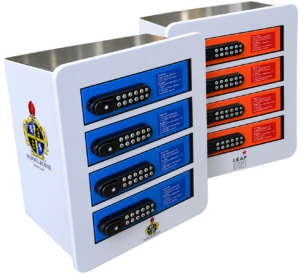
PIN-lock charging lockers are designed to give users controlled access to individual compartments. They can be useful in environments where people want to leave a phone charging while attending to something else.
The exact procedure varies by product, so a buyer should always ask for a demonstration of the specific model.
The typical user process
A general PIN-lock process may involve selecting an available compartment, connecting the phone, setting or entering a code, securing the door and returning later to unlock it.
Some systems allow users to generate their own codes. Other systems may use a different access procedure.
Do not assume that every locker has the same functions or that every product allows a user-generated code. Confirm these details with the supplier.
What a PIN lock can and cannot do
A PIN lock provides a method of controlling access to a compartment. It can make it more practical for users to leave their devices in a designated place while they carry on with other activities.
However, a PIN lock should not be treated as a complete guarantee of security. It does not remove every risk associated with unattended devices, misuse, lost codes or equipment failure.
A business should consider the physical construction of the unit, the locking mechanism, how access problems are handled and whether the venue’s operating procedures are suitable.
It should also be clear about responsibility for devices left in the locker. Avoid making promises about theft prevention or insurance coverage unless those claims are supported by the supplier’s documentation and applicable policy terms.
Questions to ask the supplier
Before purchasing, ask:
-
How does a user set and retrieve their PIN?
-
What happens if a user forgets the code?
-
Is there an authorised override procedure?
-
Who is permitted to use that procedure?
-
Can the locking system be demonstrated before purchase?
-
What support is available if a compartment cannot be opened?
-
What are the recommended operating and maintenance procedures?
The answers should be documented clearly enough for the business to train staff and write simple user instructions.
Why signage matters
Even a straightforward lock can confuse users if the instructions are unclear.
Good signage should explain the basic process in plain language and identify the appropriate contact or assistance procedure. Where the venue serves visitors from different language backgrounds, the business may also consider whether additional languages or simple visual instructions would help.
The goal is to make the charging process understandable without creating unnecessary work for staff.
Vischarge’s four-door PIN-lock locker
Vischarge describes its four-locker charging station as having digital keypad locks and user-generated lock codes. The website also lists USB cables and wireless charging as features of this product. Confirm the current model specification and operating procedure before making a purchase.
For a venue considering a compact lockable solution, the four-door charging locker is a useful product to assess.
6. Benefits of branded phone charging stations
A branded phone charging station can provide a practical service while giving a business another way to present its identity in a physical environment.
The important point is that the charging function should come first. Branding is most useful when it complements a product that people genuinely need and can use conveniently.
A useful service for customers and visitors
When a phone battery runs low, people may become distracted by finding a suitable charging point. A clearly identified charging station gives them an obvious place to start.
In a retail setting, this may improve convenience for visitors. In a hotel, it may be useful for guests waiting in shared areas. At a conference, it may help attendees who rely on their phones for event schedules, tickets and communication.
These are reasonable use cases, although the value of the service depends on how well the unit is placed and managed.
A physical brand touchpoint
Digital advertising is only one way for a business to communicate with customers. Physical items in a venue can also carry brand messages.
A charging station may be seen by people approaching it, using it or waiting nearby. If the unit has customised branding, it can display a logo, campaign artwork or sponsor identity in a relevant setting.
This creates an opportunity for visibility, but it should not be confused with a guaranteed advertising result. The number of people who see the unit, notice the branding or remember the message will vary.
Businesses should avoid assuming that every user will engage with a campaign simply because it appears on a charging station.
Opportunities for events and sponsorships
At an exhibition or corporate event, organisers often need to balance practical facilities with sponsor visibility.
A branded charging station may help combine these needs. It can be positioned in an area where attendees naturally pause, provided the location is convenient and does not obstruct movement.
A sponsor might choose to include a concise message alongside its logo. The message should be readable and relevant rather than overloaded with text.
Before ordering, the organiser should confirm how much of the unit can be branded, the artwork requirements and the deadline for approving the final design.
A consistent look across locations
For a business with several branches or venues, consistent branding can help create a more cohesive appearance.
A business might choose the same logo treatment and colours for charging equipment in different reception areas. A national event organiser might use branded stations at several events, provided the product and delivery arrangements suit the schedule.
Consistency depends on the supplier’s available customisation options and the quality of the approved artwork. It is worth agreeing on the design before production rather than assuming that every surface can be customised in the same way.
How to assess whether branding is working
Businesses should measure the results they care about instead of assuming that branding automatically produces sales.
For an event, useful observations might include how frequently the station is used, whether attendees notice the sponsor branding and whether users provide feedback about the facility.
For a retail environment, the business might look at usage patterns, customer comments or whether the station is being used as intended.
These observations can help a business decide whether to repeat or adjust the activation. They do not, by themselves, establish that the station caused a change in revenue.
Making the branding useful rather than intrusive
A well-designed charging station should remain easy to recognise and use.
The brand identity should not make the instructions difficult to read or hide important information about charging or access. If the unit has separate areas for branding and user instructions, keep their purposes distinct.
Before approving artwork, check:
-
Whether the logo is clear at the expected viewing distance.
-
Whether colours and text remain legible.
-
Whether instructions can be read easily.
-
Whether the design follows the company’s brand guidelines.
-
Whether the final artwork matches the actual product dimensions.
Vischarge promotes customised branding for its charging equipment. Businesses interested in a branded unit should ask for the available branding options and confirm the design approval process before placing an order.
7. Choosing the right charging solution for your business
Choosing a phone charging locker should start with a practical assessment of the venue.
It is tempting to focus on the product photo, the number of cables or the headline offer. Those details matter, but the equipment must also fit the space, serve the expected users and be manageable over time.
A short planning exercise can prevent an expensive mismatch.
Step 1: Identify who will use it
Start by identifying the main users.
Are they customers visiting a shopping centre? Guests at a hotel? Employees in an office? Members at a gym? Visitors attending a conference?
Different users have different needs. A person attending a conference may want a quick charge between sessions. A hotel guest may prefer to leave a device charging in a secure compartment. An employee may use a shared charging point during the workday.
Write down the most common situations in which the equipment will be used. This gives you a clearer basis for comparing products.
Step 2: Estimate likely demand
You do not need a complicated forecasting model to make a useful first estimate.
Consider how many people visit the venue, when demand is likely to peak, and how long users may need to charge their devices.
For a permanent installation, look at typical daily activity and any predictable busy periods. For an event, consider the number of attendees, the length of the event and the timing of breaks.
If demand is uncertain, start with a conservative estimate and ask the supplier what information is needed to select a suitable configuration.
Remember that the number of compartments or cables is not the same as the number of users the unit can serve over an entire day. Turnover depends on how long people use each connection.
Step 3: Decide whether security is a priority
Ask whether users need a place to leave their devices or simply somewhere to connect them while they remain nearby.
If individual storage and PIN-lock access are important, a locker may be more suitable.
If quick access and shared use are more important, an open charging station may be a better fit.
Consider how the venue will communicate the rules, handle access problems and respond if a user needs assistance.
Step 4: Confirm device compatibility
Phones use different charging connectors, and the devices people bring may change over time.
Ask which cables are included and whether the station supports the types of devices your audience is likely to use. If the supplier advertises wireless charging, confirm which devices and charging arrangements are supported.
Do not rely on broad phrases such as “charges all phones” without understanding the actual compatibility information.
If the venue expects people to charge tablets, watches or other devices, confirm that capability separately.
Step 5: Measure the available space
Check the intended location before ordering.
Record the available floor or counter space, the distance to a suitable power source, the expected movement of people around the unit and any restrictions imposed by the venue.
For a wall-mounted unit, confirm the mounting requirements. For a floor-standing product, check the footprint and the need for a stable location.
Do not place equipment where it creates an obstruction or makes access difficult. For public venues, the final placement should be assessed against the site’s safety, accessibility and operational requirements.
Step 6: Decide how important branding is
If the charging station is intended to support a marketing campaign, sponsor activation or customer-facing brand experience, customised graphics may be valuable.
If the main purpose is a staff amenity in a back-office area, branding may be less important than capacity and ease of use.
Ask the supplier which areas can be customised, what artwork is required and whether a design proof will be provided.
If the product is being purchased for a specific campaign, make sure the branding approval process fits the event or launch schedule.
Step 7: Understand the service arrangements
A commercial charging product may contain cables, electronic components and, in the case of lockers, locking mechanisms. The business should understand what happens if something stops working.
Ask what the service agreement covers, whether parts or labour are included, how support requests are handled and whether there are exclusions or conditions.
Do not assume that a service contract covers every possible repair or that it is the same as a product warranty.
Get the terms in writing and make sure the person responsible for managing the equipment knows how to request assistance.
Step 8: Compare the full purchase offer
Compare quotations on a like-for-like basis.
One supplier may quote for the unit only, while another may include branding or delivery. A product with more features may also have different service conditions.
Record what each quotation includes and identify anything that remains unclear.
| Item to compare | Questions to ask |
|---|---|
| Product configuration | How many compartments, cables or connections are included? |
| Charging compatibility | Which connector types and charging options are supported? |
| Security | Does the model include individual locks, and how does access work? |
| Branding | Is custom branding included, and what are the artwork requirements? |
| Delivery | Is shipping included, and what delivery conditions apply? |
| Service | What is covered, for how long, and under what conditions? |
| Installation | Is any installation or mounting work required? |
| Promotion | Is a second unit included, and what are the eligibility terms? |
| Total cost | Are there additional charges that are not shown in the headline price? |
Step 9: Consider how the station will be managed
Even a well-chosen product needs a clear operating plan.
Decide who will check the equipment, how faults will be reported and who will respond to users who have difficulty charging or retrieving a device.
For an event, assign responsibility before attendees arrive. For a permanent installation, include the charging equipment in the venue’s normal facilities checks.
The goal is not to create unnecessary work. It is to make sure the station remains useful after the initial purchase.
Step 10: Ask the supplier to recommend a configuration
Once you have identified your venue, expected users, capacity needs and security requirements, ask the supplier to recommend a suitable model.
Provide enough detail for the recommendation to be meaningful: where the unit will be used, how many people may need it, whether individual compartments are required, and whether branding is important.
This is a more productive approach than asking for “the best charging station” without explaining the job it needs to do.
For businesses comparing the two Vischarge options, begin with the four-door charging locker and the Vischarge product range, then confirm the current specifications and offer details before deciding.
8. Phone charging lockers for shopping centres and retail businesses
Shopping centres bring together customers who may spend anything from a quick visit to several hours browsing, eating, meeting friends or running errands. During that time, a phone can become essential for communication, mobile payments, navigation, loyalty programmes and transport arrangements.
A dedicated charging point can be a useful amenity, particularly when it is easy to find and simple to use.
For shopping centre managers and retailers, the decision is whether the proposed equipment meets a genuine visitor need and can be operated sensibly within the venue.
Where might a charging locker be placed?
Potential locations include a customer service area, a suitable seating zone, a managed waiting area or another accessible part of the centre.
The best location depends on the layout and how people move through the space. A unit should be visible enough for customers to find but should not obstruct walkways or interfere with nearby retail activity.
Before installation, the centre should consider access to power, mounting or placement requirements, visibility of instructions and responsibility for monitoring the equipment.
A central location may be convenient, but it is not automatically the right choice if it creates congestion or leaves the unit difficult to supervise.
Should a shopping centre choose lockers or an open station?
The answer depends on the service the centre wants to provide.
A locker may be attractive when customers want to secure their phones while continuing to shop. An open station may suit a seating area where visitors can remain nearby while charging.
A centre should also consider the expected number of simultaneous users. A four-compartment locker may be suitable for a smaller or more targeted need, but a venue expecting heavy demand should evaluate capacity carefully.
Do not assume that a single unit will meet demand across an entire shopping centre without first considering visitor numbers and usage patterns.
Can charging equipment support a retail brand?
Yes, where the product offers suitable branding options. A charging unit can carry the shopping centre’s identity, the branding of a participating retailer or approved campaign artwork.
For a sponsored installation, the centre should agree on who owns the artwork, who approves it and how long the campaign will run. If the unit is intended to remain in place permanently, a design that fits the centre’s overall appearance may be more suitable than short-term campaign graphics.
A practical example
Imagine a shopping centre that receives feedback from visitors asking for a convenient charging facility.
Rather than purchasing equipment immediately, the centre could identify the areas where visitors tend to wait, estimate likely demand and determine whether users would prefer secure storage or an open charging point.
The management team could then compare the available products, confirm the electrical and placement requirements, and establish a procedure for handling faults.
After installation, it could review user feedback and observe whether the facility is being used as intended.
That process provides a more useful basis for evaluating the investment than assuming that charging equipment will automatically improve customer spending.
Questions for shopping centre managers
Before requesting a quotation, consider:
-
Where will the station be placed?
-
How many people may need to charge simultaneously?
-
Do visitors need individual secure compartments?
-
Would branding be useful?
-
Who will handle user questions?
-
How will the centre manage faults or access problems?
-
What are the delivery and service arrangements?
For a shopping centre looking for a branded charging solution, Vischarge’s phone charging locker range is a starting point for discussing suitable configurations.
9. Phone charging stations for hotels and hospitality businesses
Hotels, guest houses, conference venues and other hospitality businesses depend on making guests feel comfortable and well looked after. Small practical amenities can contribute to that experience, especially when they solve a problem guests encounter regularly.
A charging station may be useful in a reception area, lounge, meeting space or other suitable shared location.
The right configuration depends on whether guests are expected to remain near their devices or need a place to leave them while attending to other activities.
Charging in reception and lounge areas
Guests often spend time in shared areas while waiting for transport, checking in, meeting colleagues or preparing for an appointment.
An open charging station can provide a convenient shared point for guests who are comfortable remaining nearby. A lockable charging locker may suit a venue where guests want to secure their devices while they move around the property.
The hotel should decide which experience it wants to offer before choosing a product.
Consider the guest journey
A charging station should be easy to locate and understand.
If guests need to ask reception staff for help every time they use the equipment, the process may create more work than expected. Clear instructions and sensible placement can make the facility easier to use.
The hotel should also decide whether the station is available to all guests, whether there are any operating hours or restrictions, and who will handle access problems.
These details should be communicated consistently.
Branding in hospitality
A branded station may be suitable for a hotel group that wants to maintain a consistent look across properties. It could also be relevant in a conference venue where sponsors or corporate clients use shared spaces.
The design should complement the setting. A large promotional message may not suit a quiet lounge, while a clearly branded station may be appropriate in a conference foyer.
The available customisation depends on the selected product and should be confirmed before artwork is approved.
What hospitality buyers should check
Before purchasing, confirm the following:
-
Is the unit appropriate for the intended location?
-
Does it need individual lockable compartments?
-
Which charging connections are included?
-
Can guests understand how to use it?
-
Who is responsible for checking the equipment?
-
What happens if a guest cannot access a compartment?
-
What service support is included?
-
Does the branding fit the hotel’s visual identity?
A hotel should also establish its own policy regarding unattended devices and explain that policy where necessary. The presence of a lock should not be presented as a guarantee against every security risk.
10. Phone charging stations for gyms and fitness centres
Gyms and fitness centres have a particular charging challenge: members may want access to their phones before, during and after a workout, but they may not want to carry a device throughout every activity.
A dedicated charging point can be useful if it fits the gym’s layout and operating procedures.
Where could a charging station go?
Potential locations include reception, a member waiting area or another suitable shared space.
The unit should be positioned where it does not interfere with exercise equipment, circulation routes or emergency access. A gym should also consider whether the location is exposed to moisture, impact or other conditions that could make it unsuitable for the selected equipment.
Always check the manufacturer’s instructions about the intended operating environment.
Locker or open station?
A lockable charging locker may appeal to members who want to secure their phones while exercising. An open station may suit a reception or waiting area where members remain nearby.
The gym should consider its existing locker arrangements. If members already have access to secure storage, an open charging point in a suitable supervised area may serve a different purpose. If charging is expected to take place while members are away from reception, a lockable option may be worth evaluating.
There is no universal answer. The decision should reflect member behaviour and the service the gym wants to provide.
Make the process clear
A charging station should not create confusion about whether members can leave devices unattended, how they access a compartment or who is responsible for assistance.
The gym should establish a simple procedure and make it visible.
If the facility is used by members with different levels of technical confidence, straightforward instructions are especially important.
A branded amenity for fitness businesses
A branded charging station can be customised where the product supports it. For a gym group, this may help maintain a consistent presentation across branches. For a sponsored fitness event, branding may form part of the event experience.
However, branding should never take priority over safe placement, clear instructions or ease of use.
Before ordering, ask the supplier to confirm the available graphics, product dimensions, electrical requirements and service arrangements.
11. Phone charging lockers for offices and workplaces
Modern workplaces rely on phones for communication, authentication, scheduling and many everyday tasks. A charging facility can be useful in an office where employees, clients and visitors share the same building.
The need may be modest in a small office but more significant in a large workplace with meeting rooms, reception areas and frequent visitors.
Charging for employees and visitors
An office might choose a shared charging station in reception or a common area. This gives visitors somewhere to connect a phone while waiting for a meeting.
A lockable unit may be more appropriate where employees or visitors want to secure a device while they attend a meeting or move around the building.
The decision should reflect how the facility will be used, rather than simply following what another business has purchased.
Think about workplace policies
Some organisations have policies covering personal devices, visitor access or equipment used in shared areas.
Before installing a charging station, check whether it needs to be included in those procedures. Decide who may use it, who will manage access if required and how faults should be reported.
If the unit is located in a shared office, it may also be useful to include it in routine facilities checks.
Procurement and service considerations
Business buyers should compare the full purchase offer, including the unit, branding, delivery and applicable service arrangements.
A low initial price may not tell the whole story if important items are excluded. Conversely, a product with additional features may not offer value if the workplace will never use them.
The right comparison is between products that meet the same requirements.
When branding matters in an office
A branded charging station can help maintain a consistent presentation in a reception area or client-facing meeting space.
For an internal staff facility, branding may be less important than capacity, ease of use and support.
The organisation should decide what it needs before approving artwork or selecting a model.
12. Phone charging solutions for schools and universities
Educational institutions have varied requirements. A small school, a university campus and a student residence may have very different expectations for charging equipment.
Before purchasing, the institution should consider who will use the unit, where it will be located and how its use will be managed.
Charging in shared educational spaces
Potential locations might include a suitable reception area, supervised common space or student facility, subject to the institution’s own rules and site requirements.
A charging station should be placed where it does not obstruct movement or create unnecessary supervision demands.
The institution should also consider whether the intended users need secure compartments or simply a convenient place to connect their devices.
Security and operating procedures
Where students or visitors may leave phones unattended, the institution should establish clear expectations about access, responsibility and what happens if a problem occurs.
A PIN-lock system may support controlled access to individual compartments, but it does not eliminate every risk. The institution should review the actual locking mechanism and operating procedure before approving the product.
The equipment should not be described as compliant with a particular regulation or as approved for a particular environment unless the relevant evidence is available.
Purchasing for a campus
A procurement team should check product capacity, charging compatibility, location requirements, delivery, servicing and the terms of any contract.
If several units are being considered, the institution should also decide whether it wants a consistent configuration and branding across multiple buildings.
A supplier can then recommend a suitable option based on the actual needs of the institution.
13. Phone charging stations for conferences, exhibitions and events
Events create a particular demand for charging. Attendees use phones to check schedules, scan tickets, exchange contact details, take photographs, access presentation materials and communicate with colleagues.
A charging station can be a useful facility during a long conference, exhibition or corporate event.
For organisers, it may also create an opportunity to provide a branded touchpoint or give a sponsor a practical way to be present in the venue.
Where should an event charging station go?
Possible locations include registration areas, lounge spaces, networking areas and other places where attendees naturally pause.
The best location depends on the venue layout and event schedule. A station placed directly in a narrow entrance may create congestion, while one hidden in an unused corner may be difficult to find.
Organisers should consider visibility, access to power, movement around the unit and whether staff need to monitor the facility.
Open charging station or secure locker?
An open station may suit a networking area where attendees can remain nearby while charging. A lockable charging locker may be preferable where users want to secure their phones and continue attending sessions.
Consider the event’s format. Attendees at a short networking session may use charging equipment differently from delegates attending a full-day conference.
The number of attendees is only one part of the decision. Break times, session length, expected charging duration and the number of simultaneous users also matter.
Branding and sponsorship
A branded charging station can give a sponsor a physical presence in an area that attendees may use.
The sponsor’s identity should be clear, but the design should not make the unit difficult to operate. Essential instructions must remain readable.
Before the event, confirm:
-
Which branding surfaces are available.
-
Who supplies and approves the artwork.
-
When artwork must be finalised.
-
The expected delivery date.
-
Whether any installation or setup is required.
-
Who will manage the unit during the event.
-
What support is available if a fault occurs.
Buying versus hiring
For a business that organises events regularly, purchasing equipment may be worth evaluating against the cost and availability of hiring. For a one-off event, hiring may be more practical, depending on the event schedule and the options available.
The comparison should include more than the initial price. Consider transport, setup, branding, storage between events, maintenance and the expected frequency of future use.
Do not assume that buying is always cheaper or that hiring is always more convenient. The answer depends on the business’s circumstances.
A sensible event planning process
Start by identifying the audience, venue and expected usage. Then decide whether secure compartments or shared charging access are more appropriate.
Ask the supplier to confirm the configuration, branding process, delivery arrangements and any support requirements. Leave enough time to approve artwork and resolve logistical questions before the event.
A charging station should be ready to use when attendees arrive, with instructions that are easy to understand.
For event organisers considering a branded unit, the Vischarge website provides a starting point for exploring the available charging products and discussing the appropriate configuration.
14. Branding and customisation opportunities
Custom branding can turn a standard piece of equipment into something that fits the look and feel of a business, venue or campaign.
For a company purchasing a phone charging station, the practical question is what branding is available on the selected product and how that branding will be produced.
Vischarge promotes customised branding for its charging equipment. The exact design possibilities should be confirmed for the model being ordered.
What can a business brand?
Depending on the product and the supplier’s available options, a business may want to include:
-
Its company logo.
-
Brand colours.
-
A campaign identity.
-
An event or exhibition theme.
-
Approved sponsor artwork.
-
A concise promotional message.
Not every product necessarily supports every design treatment. The available surfaces, materials and artwork requirements should be confirmed before the design is finalised.
What should you prepare before requesting branding?
A little preparation can make the process smoother.
First, gather the correct logo files and any brand guidelines. If the unit is part of a campaign, decide what message should appear and whether the artwork must follow a specific design template.
Second, identify who has authority to approve the design. A delay in approval can affect the production or delivery schedule.
Third, ask the supplier to show how the artwork will appear on the actual unit. A design that looks good on a computer screen may not work as well when applied to a smaller physical surface.
Finally, confirm whether branding is included in the quotation and whether any changes after approval may incur additional costs.
Keep the design readable
A charging station has a practical job to do. Users need to find the charging connections, understand the instructions and interact with the equipment.
Branding should support that experience rather than compete with it.
A clear logo and concise message are usually more useful than filling every available surface with promotional text. If instructions and branding appear together, make sure users can still read the instructions easily.
Branding for multiple units
Businesses purchasing more than one unit may want a consistent appearance across their locations.
Before placing a larger order, confirm the design dimensions, artwork approval process and whether the same branding treatment can be applied to each unit.
If a second unit is included as part of a promotion, make sure the offer specifies how its branding will be handled and whether the same artwork can be used.
Ask for the branding details in writing
Before approving an order, confirm:
-
Which areas of the unit can be branded.
-
What file formats are accepted.
-
Whether a design proof is provided.
-
Who approves the final artwork.
-
Whether branding is included in the price.
-
Whether changes after approval incur charges.
-
How branding approval affects the delivery schedule.
These questions help prevent misunderstandings and give the business a clearer idea of what it will receive.
15. What to look for when buying phone charging lockers in South Africa
A commercial charging locker is a purchase that should be assessed against the needs of the business, not just its headline price.
The following checklist can help buyers compare products and suppliers more confidently.
1. Product configuration
Confirm the number of compartments, the size of each compartment and the overall dimensions of the unit.
If the product is an open station, confirm the number of cables and the intended simultaneous charging capacity.
Do not assume that products with similar names have the same configuration.
2. Charging compatibility
Ask which charging connectors are included and which types of devices they support.
If wireless charging is advertised, confirm the supported devices and any relevant limitations.
Where the venue serves a wide range of users, it is worth checking whether the available connectors cover the devices most likely to be brought to the site.
3. Locking and access
For a locker, ask how users secure and retrieve their phones.
Confirm whether the product uses PIN codes, keys, access cards or another method. If a PIN lock is included, ask what happens if a user forgets a code or a lock stops working.
A demonstration is often the easiest way to understand the user experience.
4. Durability and intended environment
Ask the supplier what environment the unit is designed for and how it should be maintained.
A product intended for a managed indoor reception area may have different requirements from equipment placed in a high-traffic public venue.
Do not assume that a product is suitable for outdoor use, exposure to moisture or heavy impact unless the manufacturer confirms it.
5. Branding options
If branding is important, confirm what can be customised and whether the artwork process is included in the purchase.
Request the artwork specifications and establish who will approve the final design.
If the equipment will form part of a campaign, agree on the production and delivery schedule before committing to an event date.
6. Delivery and installation
Confirm whether shipping is included and whether the quoted delivery arrangement covers the intended destination.
Ask whether the product requires installation, mounting or any preparation at the site. If it does, establish who is responsible and whether that work is included in the quotation.
Avoid assuming that free shipping necessarily includes installation or every possible delivery-related cost.
7. After-sales support
A supplier’s support arrangements are an important part of the buying decision.
Ask how faults are reported, who handles service requests and what the applicable service contract covers.
Confirm whether parts, labour, travel, transport and other potential costs are included or excluded. Do not rely on a headline statement such as “free service” without reading the actual terms.
8. Warranty and service contract
A warranty and a service contract can have different purposes and conditions.
A warranty may cover specified defects or failures, while a service contract may define the support or maintenance provided during a stated period. The actual terms vary.
Ask for the documents that apply to the product you are buying. Confirm the start date, duration, exclusions, customer responsibilities and process for requesting support.
9. Supplier transparency
A credible supplier should be able to explain the product, clarify the specification and provide the relevant purchasing terms.
Ask for a written quotation that identifies the model, configuration, branding, delivery and service arrangements.
If a product description contains conflicting details, resolve those differences before paying.
10. The full commercial offer
Compare all relevant inclusions, not just the initial price.
A supplier may include branding, shipping or additional support in an offer, while another may quote for these separately. The comparison is only meaningful when the inclusions and conditions are clear.
For Vischarge’s current offer, confirm whether a second similarly branded unit is included, which product configurations qualify and what conditions apply.
A buyer’s comparison sheet
Use this simple template when reviewing quotations.
| Requirement | Supplier A | Supplier B | Supplier C |
|---|---|---|---|
| Product and model | Confirm | Confirm | Confirm |
| Compartments or cables | Confirm | Confirm | Confirm |
| Locking method | Confirm | Confirm | Confirm |
| Supported connectors | Confirm | Confirm | Confirm |
| Branding included | Confirm | Confirm | Confirm |
| Shipping included | Confirm | Confirm | Confirm |
| Service terms documented | Confirm | Confirm | Confirm |
| Warranty terms documented | Confirm | Confirm | Confirm |
| Additional unit promotion | Confirm | Confirm | Confirm |
| Total quoted cost | Confirm | Confirm | Confirm |
A short, structured comparison can help a procurement team explain why a particular product was selected and what the business is actually receiving.
16. Pricing, value and total cost of ownership
The price of a phone charging locker or branded charging station depends on the product configuration and what is included in the purchase.
There is no single price that applies to every commercial charging solution. A compact unit with a few compartments may differ considerably from a larger installation or a branded multi-cable station.
The most useful approach is to compare the total offer against the business’s requirements.
What affects the price?
Potential cost factors include:
-
The product’s configuration and capacity.
-
The number and type of charging connections.
-
The locking method.
-
Available branding and customisation.
-
Delivery arrangements.
-
Installation or mounting requirements, where applicable.
-
Service and maintenance arrangements.
-
Any optional features or accessories.
These factors should be verified for the particular product rather than assumed from its category.
Look beyond the purchase price
The purchase price is only one part of the decision.
A business may also need to consider where the unit will be placed, how it will be checked, who will manage user queries and what happens if a component fails.
If installation or mounting is required, include that in the assessment. If the supplier offers a service contract, read the terms carefully and understand what is included.
A lower purchase price may be attractive, but it is not necessarily the lowest-cost option over time. Equally, a more expensive product is not automatically better value if the additional features do not meet a genuine need.
An illustrative cost comparison
Imagine a business comparing two quotations.
-
Option A: The quoted price includes the unit and delivery, but branding and servicing are charged separately.
-
Option B: The quoted price includes the unit, approved branding, delivery and a defined service arrangement.
The business should list all applicable costs for each option before comparing them. It should also check whether the products have comparable capacities, features and support terms.
This example is illustrative only; it does not represent actual Vischarge prices or a claim that either option is inherently better.
How to assess value for money
Ask four questions.
Does the product meet the need? A unit with features the venue will never use may not represent good value.
What is included? Branding, delivery and servicing should be clearly documented.
What happens if something goes wrong? The support arrangements can affect the time and effort required to keep the equipment operating.
Can the business justify the cost? Consider the expected usage, the importance of the service to the venue and the available budget.
This approach helps avoid decisions based solely on the lowest advertised price.
Ask for a complete quotation
Before placing an order, request a quotation that identifies the exact product and all relevant inclusions.
For Vischarge, that means confirming the model, branding, delivery, service contract and any applicable promotional unit.
If the business is purchasing several units or has specific installation requirements, provide those details before the quotation is finalised.
17. Why branding, delivery and after-sales support matter
When comparing charging equipment, the product itself is only part of the decision. Branding, shipping and after-sales support can also influence whether the purchase is practical for the business.
These benefits are worth understanding properly before ordering.
Free customised branding
Vischarge advertises free customised branding on its charging solutions.
For a business, this can reduce the need to arrange branding separately, provided the chosen product and the requested design qualify under the offer.
Before placing an order, confirm the available branding areas, the artwork process and whether the desired design is included. If the unit is part of a campaign, make sure the design can be approved in time.
Free shipping
Vischarge also promotes free shipping or express delivery on its website.
Confirm the delivery terms for the actual order. Ask whether the offer applies to the intended destination, how delivery timing is calculated and whether any additional arrangements are required for the delivery location.
If the equipment is needed for a specific event or opening date, allow time for branding approval and obtain a realistic delivery estimate in writing.
The 10-year free service contract
The supplied business information identifies a 10-year free service contract as one of Vischarge’s key benefits. The product website also mentions a 10-year free service contract on the 12-locker page.
For a buyer, the important question is what that contract actually provides.
Before relying on the benefit, request the current service contract and confirm its duration, scope, exclusions, response process and any responsibilities that remain with the customer.
A service contract should not automatically be described as a 10-year warranty. These are different terms and may cover different things. The wording used in the article, quotation and product page should match the documents supplied with the purchase.
The additional branded unit
Vischarge advertises a limited-time offer under which an eligible buyer receives an additional similar charging unit with customised branding.
This may be useful for a business that wants charging access in two areas, such as a reception space and a lounge, or at separate points within an event venue.
However, the business should confirm which purchase qualifies, which unit is supplied free, how branding is handled, whether shipping is included and whether any other conditions apply.
Do not assume the offer is available indefinitely or that every product qualifies. Obtain confirmation of the terms at the time of purchase.
Make sure the written offer matches the conversation
Before paying, ask for the final quotation to identify the main product, branding, shipping, service terms and any additional unit included in the promotion.
This provides a clear record of what the business expects to receive.
A strong commercial offer is most useful when the buyer understands exactly what it includes.
18. Exploring the Vischarge product range
Vischarge offers charging solutions for businesses that need either secure compartments or shared, branded charging access. The two product types discussed in this guide serve different purposes, so it is worth understanding their configurations before deciding which one to buy.
Option A: Vischarge four-door phone charging locker
The four-door locker is designed for businesses that want individual compartments and a defined access method.
Vischarge’s website describes this model as having four individual lockers, digital keypad locks, user-generated lock codes, USB charging cables and wireless charging. It also lists customisable graphics. Confirm the current specification, included accessories and locking procedure before ordering.
Who might consider this product?
-
Shopping centres looking to provide a secure charging option.
-
Gyms where members may want to leave phones charging.
-
Offices with a shared charging facility.
-
Hotels or venues considering a lockable device-charging amenity.
-
Businesses that prefer individual compartments over a shared charging point.
The suitability depends on the intended location and expected demand. A four-compartment unit provides four individual compartments, so businesses should consider whether that capacity is enough for their users.
What should you confirm?
Before purchasing, ask about the internal dimensions, included charging cables, wireless charging arrangements, lock operation, electrical requirements, branding options and service terms.
Also confirm the dimensions of the complete unit and check that it fits the proposed location.
View the Vischarge four-locker phone charging station.
Option B: Vischarge branded multi-cable charging station
A multi-cable station is designed for shared charging access rather than necessarily providing a separate lockable compartment for each user.
Vischarge promotes an M16 mobile phone charging station with 16 cables, customised branding and mounting options. The website describes cable types including Lightning, USB-C and Micro USB on the relevant product information. Confirm the exact current model and specification before ordering.
Who might consider this product?
-
Conference organisers.
-
Exhibition and trade-show organisers.
-
Businesses arranging product launches.
-
Hotels and hospitality venues.
-
Reception and waiting areas.
-
Retailers that want a shared charging point.
-
Companies that want a branded charging amenity.
This type of station may be particularly useful where people need convenient access to charging and can remain near their devices.
What should you confirm?
Ask which cables are included, whether all 16 can be used simultaneously, the charging capabilities of the unit, mounting options, branding areas, delivery arrangements and the applicable service terms.
The number of cables should not be treated as proof of a particular charging speed or compatibility with every device.
Explore the Vischarge website to identify the correct M16 product page and obtain a quotation for the current configuration.
Which Vischarge option should you choose?
Use the following as a starting point.
| Your main requirement | Product to investigate |
|---|---|
| Four separate lockable compartments | Four-door charging locker |
| PIN-lock access | Four-door charging locker, subject to confirmation of current specification |
| Shared access through multiple cables | Branded M16 charging station |
| A branded charging point for an event | Branded multi-cable station |
| Secure charging while a user moves away | Lockable charging locker |
| A charging amenity in a shared reception area | Either option, depending on how users will access their phones |
The table is a guide, not a substitute for checking the exact specification. A venue’s capacity, security and placement requirements should determine the final choice.
Ask Vischarge for a recommendation
If you are uncertain which configuration will work best, explain the intended use rather than simply asking for the cheapest product.
Tell the supplier where the unit will be placed, how many people may need it, whether secure compartments are required and whether the unit must carry your branding.
You can then compare the recommended configuration with your requirements and confirm the complete commercial offer.
19. Understanding the Vischarge promotional offer
Vischarge currently advertises a limited-time promotion under which a qualifying purchase can include a free additional similar charging unit with customised branding. Its website describes versions of the offer for four-locker, 12-locker and multi-cable charging products.
For a business planning to install charging equipment, the offer may create an opportunity to provide charging access in more than one location.
How could a business use two units?
Consider a hotel that wants a charging facility near reception and another in a suitable shared lounge. Alternatively, an event organiser may want one unit near registration and another in a networking area.
A retailer might consider placing units in two suitable customer areas, provided both locations have appropriate space and access to power.
These are examples of possible uses, not guaranteed outcomes. The business should first confirm that the proposed locations are suitable and that the selected product meets the expected demand.
What should be confirmed before claiming the offer?
Before placing an order, obtain written confirmation of:
-
Which purchased models qualify.
-
Which additional unit will be supplied.
-
Whether the additional unit is identical or a similar model.
-
Whether custom branding is included on both units.
-
Whether shipping is included for both.
-
Whether the service contract applies to both units.
-
Any exclusions, stock limitations or eligibility requirements.
-
The promotion’s actual expiry date, if one applies.
These details are important because a headline promotion may be subject to conditions.
Why the offer should be explained clearly
A buyer should not have to guess whether the additional unit is included or whether extra costs apply.
The product page and quotation should make the offer easy to understand. If the terms differ between products, explain those differences rather than using a blanket claim.
The same applies to the service contract. If the offer includes a particular service period, confirm the terms for both the purchased unit and the additional unit.
How to request a quotation
When contacting Vischarge, explain which product you are considering and where it will be used. Ask the company to confirm the current price, branding arrangements, delivery estimate, service contract and eligibility for the additional unit.
You can begin by visiting the four-door charging locker product page or the Vischarge product shop.
The aim is to receive a quotation that clearly states what is included, so you can make a confident decision.
20. Common mistakes to avoid when buying phone charging equipment
A little preparation can save time and reduce the risk of choosing a product that does not fit the venue.
Here are some of the mistakes worth avoiding.
Mistake 1: Choosing based on appearance alone
A product may look good in a photograph but still be unsuitable for the intended location.
Check its dimensions, capacity, charging options and placement requirements before ordering.
A better approach: Measure the available space and compare the product specification with the needs of the venue.
Mistake 2: Confusing cable count with capacity
A station advertised with 16 cables does not automatically guarantee that every device can charge at the same speed or that every cable can be used in every circumstance.
A better approach: Confirm the number of simultaneous connections, supported devices and charging specifications.
Mistake 3: Assuming all phones use the same connector
Different phones and other devices may require different charging connections.
A better approach: Ask which connectors are included and whether they suit the devices your audience is likely to use.
Mistake 4: Assuming a PIN lock removes every security risk
A PIN lock provides an access method, but the overall experience also depends on the locking mechanism, the physical unit and the way the venue manages access.
A better approach: Request a demonstration and establish procedures for forgotten codes, faults and user assistance.
Mistake 5: Forgetting about placement
A charging station placed in an inconvenient location may be difficult to find or may obstruct movement.
A better approach: Assess visibility, access to power, circulation routes and the needs of the people who will use it.
Mistake 6: Overlooking the service contract
A headline claim about free servicing does not explain what is covered.
A better approach: Obtain the contract, read the exclusions and confirm how service requests are handled.
Mistake 7: Comparing quotations that include different things
One quotation may include branding and delivery, while another may not.
A better approach: Compare the complete cost and all relevant inclusions before deciding.
Mistake 8: Leaving branding until the last minute
A product may need approved artwork before it can be customised.
A better approach: Ask for artwork requirements early, appoint an approver and agree on the expected timeline.
Mistake 9: Assuming a promotion has no conditions
A free additional unit may be subject to product eligibility, availability or other terms.
A better approach: Ask for the current promotional conditions in writing before making a purchase decision.
Mistake 10: Buying more capacity than the venue needs
A larger or more feature-rich product may not be necessary for a small office or low-traffic area.
A better approach: Estimate usage, consider peak demand and select a configuration that matches the actual requirement.
Mistake 11: Buying too little capacity
The opposite problem is also possible. A small unit may not serve a busy venue adequately.
A better approach: Consider the number of simultaneous users and how long each user may occupy a charging connection.
Mistake 12: Failing to plan for daily operation
Even a good product needs clear instructions and a process for reporting faults.
A better approach: Assign responsibility for routine checks and make the user instructions easy to find.
21. Frequently asked questions about phone charging lockers in South Africa
1. Where can businesses buy phone charging lockers in South Africa?
Businesses can contact specialist suppliers of commercial mobile phone charging equipment. Vischarge offers phone charging lockers and branded charging stations through its South African website. Buyers should compare the configuration, branding, delivery and service terms before ordering.
Visit Vischarge South Africa.
2. What is a phone charging locker?
A phone charging locker is a charging unit with individual compartments where users can place and charge their devices. Depending on the model, the compartments may have PIN locks or another access method.
The number of compartments, charging options and locking features vary by product.
3. How does a PIN-lock phone charging locker work?
A PIN-lock charging locker uses a code as part of its access process. The user follows the instructions for securing and retrieving the device.
The exact procedure varies between models, so ask the supplier to demonstrate the product and explain what happens if a user forgets the code.
4. How many phones can a four-door charging locker accommodate?
A four-door charging locker has four individual compartments. It is important to confirm the manufacturer’s guidance about the number of devices that can be charged within each compartment and the intended use of the included cables.
For Vischarge’s current model specification, consult the four-locker charging station page.
5. What is the difference between a charging locker and an open charging station?
A charging locker provides individual compartments and may include locks for controlled access. An open charging station provides charging connections at a shared point and does not necessarily offer individual secure storage.
The better option depends on whether users need to secure their phones or simply connect them while remaining nearby.
6. Can businesses order branded phone charging equipment?
Custom branding is available on suitable products, depending on the supplier and model. Vischarge advertises customised branding for its charging equipment.
Before ordering, confirm which areas can be branded, what artwork is required and whether branding is included in the quotation.
7. What is the difference between a 12-locker unit and a 16-cable station?
A 12-locker unit refers to a configuration with 12 individual compartments. A 16-cable station refers to a charging station described as having 16 cables.
These terms describe different product characteristics and should not be treated as interchangeable. Confirm the exact Vischarge model before requesting a quotation.
8. How many cables does the Vischarge branded charging station have?
Vischarge’s homepage describes its M16 mobile phone charging station as having 16 cables. The exact configuration should be confirmed on the product page and quotation before purchase.
9. Are phone charging lockers suitable for shopping centres?
They can be suitable for shopping centres that want to offer visitors a designated charging facility. The centre should assess demand, placement, power access, security expectations and the number of compartments required before choosing a model.
10. Are branded charging stations suitable for conferences and exhibitions?
A branded charging station may be useful at conferences and exhibitions where attendees need charging access and sponsors want a visible presence. Its suitability depends on the event layout, expected demand, branding requirements and the way the station will be managed.
11. Are charging lockers suitable for hotels?
A charging locker may suit a hotel that wants to provide individual compartments for guests who prefer to secure their phones while charging. An open station may be more suitable where guests remain nearby.
The hotel should compare both options against the intended location and guest experience.
12. Can a charging station be used in a gym?
Potentially, yes. A gym should consider the location, user behaviour, security requirements, power access and any environmental restrictions relevant to the product.
The selected unit should be installed and managed in accordance with the manufacturer’s instructions and the venue’s requirements.
13. What should a business check before purchasing a charging locker?
Check the compartment count and dimensions, charging cables, supported connectors, locking method, electrical requirements, branding options, delivery terms and service contract.
Ask the supplier to confirm the complete specification in writing.
14. Does Vischarge offer free branding?
Vischarge advertises free customised branding on its charging equipment. Confirm that the selected model and requested artwork qualify under the current offer before ordering.
15. Does Vischarge offer free shipping?
Vischarge advertises free shipping or express delivery on its website. Confirm the delivery conditions, destination eligibility and estimated delivery time for your specific order.
16. What does the 10-year free service contract cover?
The exact coverage depends on the contract. Buyers should request the current document and check the duration, included services, exclusions, customer responsibilities and process for requesting assistance.
Do not assume that a service contract is identical to a product warranty.
17. Does the Vischarge promotion include a second charging unit?
Vischarge advertises a limited-time promotion that can include a free additional similar unit with customised branding for eligible purchases. The current eligibility rules, product options, shipping arrangements and other conditions should be confirmed directly with Vischarge.
18. Is a charging locker better than an open charging station?
Neither is always better. A locker may suit users who want individual compartments and controlled access. An open station may be more convenient where users remain nearby while charging.
The right choice depends on the venue, user behaviour and capacity requirements.
19. How should a business estimate the capacity it needs?
Consider the number of people likely to use the station, peak demand, the time each user may need to charge and the available space.
Ask the supplier to help match those requirements to an appropriate configuration.
20. Can a charging station carry a sponsor’s branding?
That depends on the product’s customisation options and the supplier’s terms. Ask which areas can be branded, whether the artwork must follow a template and what approval timeline applies.
21. What information should I provide when requesting a quotation?
Provide the intended location, the type of venue, the expected usage, whether secure compartments are required, the desired branding and any delivery deadline.
Also ask for the full product specification, service terms, delivery conditions and any current promotional offer.
22. Can I install a charging station anywhere in a venue?
No. The proposed location should be suitable for the product, provide appropriate power access and avoid obstructing movement or creating other operational issues.
Follow the manufacturer’s installation instructions and the venue’s applicable safety and accessibility requirements.
23. How do I compare charging station suppliers?
Compare the exact product configuration, charging compatibility, locking method, branding, delivery, service terms and total cost.
Ask each supplier to confirm its offer in writing so you can compare like with like.
24. Should I buy a charging station or hire one for an event?
That depends on how frequently the equipment will be used and the cost and availability of hiring.
A business running events regularly may want to assess ownership costs, storage and maintenance. An organiser with a one-off event may find hiring more practical. Compare the full costs and requirements before deciding.
25. How can I request a quotation from Vischarge?
You can visit the Vischarge four-door locker product page or the Vischarge shop.
When requesting a quotation, specify the product, intended use, branding requirements and delivery location. Ask Vischarge to confirm the current price, service contract and eligibility for the additional-unit promotion.
22. Final buying checklist: before you order
Before committing to a phone charging locker or branded charging station, use this checklist to make sure you have covered the important details.
Your procurement checklist
[ ] I have identified who will use the charging equipment and where it will be placed.
[ ] I have estimated likely demand and the number of simultaneous users.
[ ] I have confirmed the exact product model and configuration.
[ ] I have checked the number of compartments, cables and supported charging connections.
[ ] I understand the locking and access procedure, if applicable.
[ ] I have checked the unit dimensions, power requirements and placement needs.
[ ] I have confirmed the branding options and artwork approval process.
[ ] I have a written quotation showing the product price and all inclusions.
[ ] I have confirmed the shipping terms and expected delivery date.
[ ] I have reviewed the service contract and any separate warranty terms.
[ ] I have checked the eligibility conditions for the additional-unit promotion.
[ ] I know who will manage the unit and handle problems after installation.
If any of these points remain unresolved, ask the supplier for clarification before placing the order. A little extra checking at this stage can prevent avoidable misunderstandings later.
23. South Africas Best Branded Phone Charging Lockers : choosing the right phone charging solution for your business
A commercial phone charging station can be a useful addition to a shopping centre, hotel, gym, office, conference venue or other business environment. The key is choosing a product that suits the people who will use it and the way the venue operates.
If individual compartments and PIN-lock access are important, a four-door phone charging locker is worth considering. If your priority is shared access to multiple charging cables and a branded presentation, a multi-cable charging station may be more suitable.
Before deciding, check the product specifications, charging compatibility, placement requirements, branding options, delivery arrangements and after-sales support. Make sure you understand the complete purchase offer rather than relying on a headline price or promotional statement alone.
Why consider Vischarge?
Vischarge offers commercial charging equipment, including a four-door PIN-lock charging locker and branded multi-cable charging stations. Its website advertises customised branding, shipping benefits and service support, with a limited-time offer that may include an additional similarly branded unit for eligible purchases. Confirm the precise terms for your chosen product before ordering.
For businesses planning a purchase, the next step is straightforward: identify the type of charging solution you need, confirm the relevant specifications and request a quotation that sets out everything included.